
There is something about an old house that makes me wonder about the people who came before us.
Standing in front of Belle Meade in Nashville, I found myself looking beyond the stately columns and imposing facade and wondering about all the lives that have passed through that front door.
The mansion took on much of the Greek Revival appearance we see today in 1853 and 1854, although Belle Meade's story reaches back even further.
That is a very long time for one house to stand and watch the world change.
Just imagine everything its walls have witnessed. Generations coming and going. Families changing. People falling in love, experiencing loss, making decisions, worrying about tomorrow, celebrating good news and simply going about the business of everyday life.
Some of their stories became history. Most probably didn't.
And somehow, I find the ones that didn't just as fascinating.
Perhaps that is part of what draws me to historic places. I find myself wondering about the ordinary moments that happened there. Who stood at those windows? Who walked down that path? How many times did someone reach for that front door believing it was just another day, never imagining that people nearly two centuries later would be walking those same grounds?
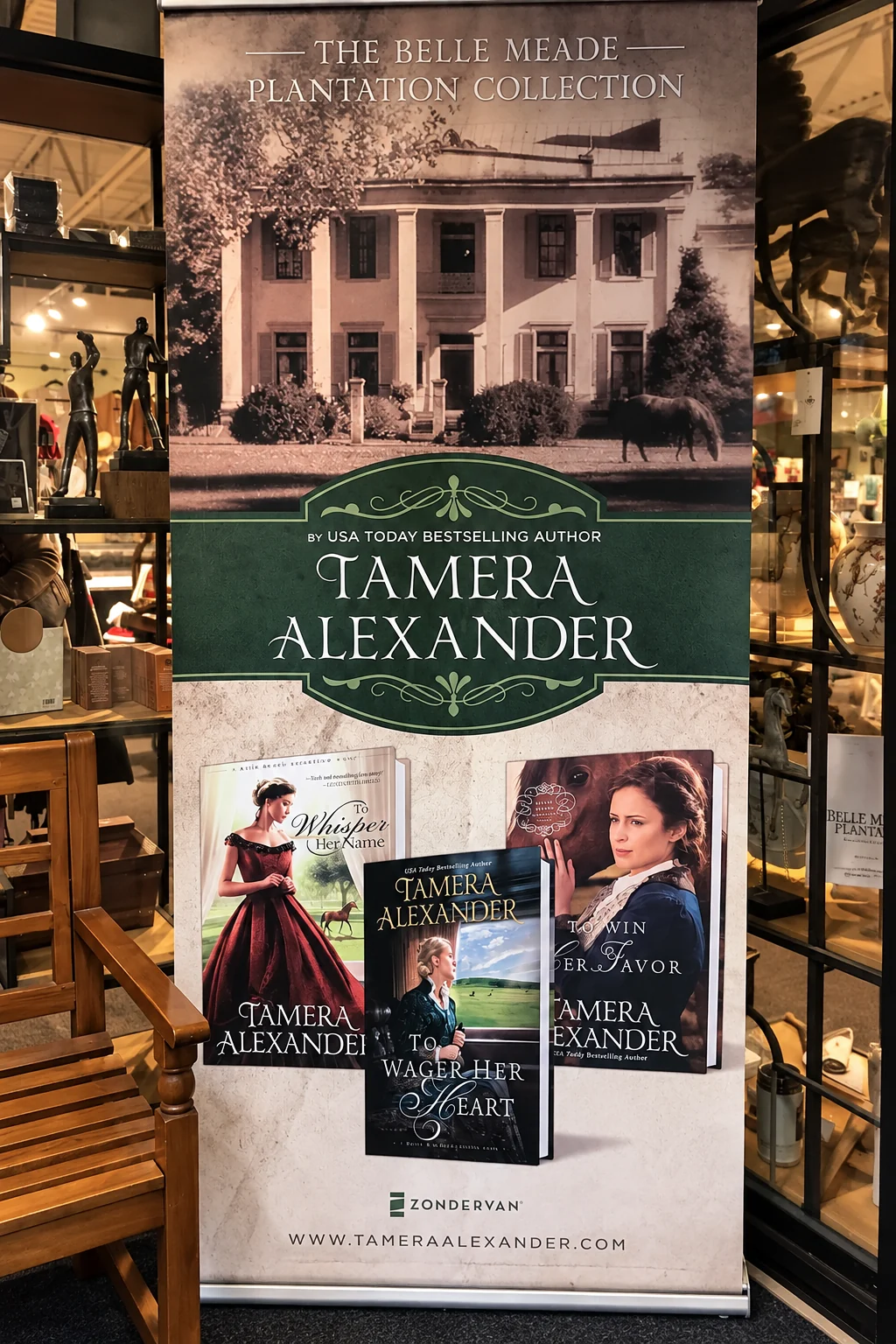
For me, Belle Meade had another interesting connection. Author Tamera Alexander used the historic estate as the setting for her Belle Meade Plantation novels. Her stories are fiction, but they are woven into the real history of Belle Meade and post-Civil War Nashville.

There is something rather wonderful about visiting a place you've encountered in the pages of a book. A setting that existed in imagination suddenly has columns you can stand beneath, a pathway you can walk, and doors you can see for yourself.
Maybe that is why places like Belle Meade give me pause.
The people change. The world changes. Years become decades and decades become centuries.
And still the old house stands.
Holding stories we know, stories someone imagined, and countless others that disappeared quietly with the people who lived them.
If those walls could talk, I wonder what they would tell us.